
Structural bolts may look similar, but differences in design, strength, diameter, type, and coating can affect how they are installed and inspected. Understanding these differences is essential for selecting the right fasteners and ensuring proper installation on structural steel projects.
Two of the most common fasteners used in structural steel connections are tension control (TC) bolts and heavy hex bolts. While both are used in high-strength connections, they differ in design, installation methods, and the tools required to achieve proper tension.
In this guide, we’ll break down the key differences between TC bolts and heavy hex bolts, explain the specifications to consider when selecting fasteners, and explore how those details influence structural bolting tool selection.
Key Takeaways
- TC bolts and heavy hex bolts are both used in structural steel connections, but their designs require different installation approaches.
- TC bolts are designed with se a splined end that shears off during tightening using a compatible shear wrench.
- Heavy hex bolts can be installed using recognized methods such as Turn-of-Nut, Calibrated Wrench, DTI, and Combined Method.
- Bolt grade, diameter, material type, and coating affect fastener selection and installation requirements.
- The correct tool must be compatible with the fastener assembly, bolt diameter, and specified installation method.
- Always follow the applicable project specifications and installation and inspection requirements.
What Are TC Bolts?
Tension control bolts, also known as twist-off or TC bolts, are designed to help simplify structural bolting. They’re commonly used in steel construction projects such as buildings, bridges, and large-scale industrial projects.
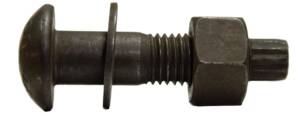
Each bolt is supplied as a matched assembly consisting of a nut, washer, and bolt with a splined end that shears off when tightened.
TC Bolt Grades
TC bolt assemblies are available in three grades:
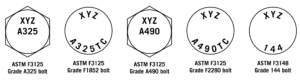
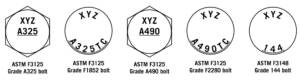
- ASTM F3125 Grade F1852: Matched bolting assemblies with a specified tensile strength of 120,000 psi.
- ASTM F3125 Grade F2280: Matched bolting assemblies with a specified tensile strength of 150,000 psi.
- ASTM F3148 Grade 144: Matched bolting assemblies with a specified tensile strength of 144,000 psi.
The required grade depends on the project specifications and the intended application. Always verify the fastener markings and documentation to ensure the assembly meets the project requirements.
How Are TC Bolts Installed?
TC bolts are installed using a shear wrench designed to grip the spline while tightening the nut. This installation is called the Twist-Off Tension Control Bolt Method. As the tool applies tension to the assembly, the spline eventually shears off.

Because shear wrenches are designed for specific bolt diameters, choosing the correct model and socket set is essential. Using the appropriate tool helps ensure compatibility with the fastener and supports consistent installation.
TC bolt assemblies are lubricated by the manufacturer. Additional field lubrication should not be applied unless specifically permitted by the applicable requirements.
What Are Heavy Hex Bolts?
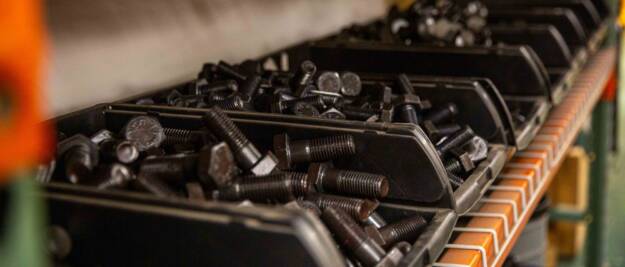
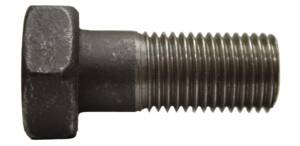
Fully tensioned structural heavy hex bolts feature larger, thicker heads than standard hex bolts. This design provides a greater bearing surface, making them suitable for the demands of structural steel connections.
Unlike TC bolts, heavy hex bolts do not have a splined end that twists off during installation. Instead, they are installed using an approved method that achieves the required bolt tension.
Heavy Hex Bolt Grades
Two common grades of high-strength heavy hex structural bolts are:
- ASTM F3125 Grade A325: Specified tensile strength of 120,000 psi.
- ASTM F3125 Grade A490: Specified tensile strength of 150,000 psi.
As with TC bolts, the required grade is determined by the project specifications. The fastener grade, diameter, coating, and installation requirements must all be considered when preparing for installation.
How Are Heavy Hex Bolts Installed?
Heavy hex bolts can be installed using several recognized methods, depending on the fastener assembly, project requirements, and applicable specification.
- Turn-of-Nut Method: The nut is rotated a specified angle after the connection has been brought to the required snug-tight condition and matchmarked.
- Calibrated Wrench Method: A calibrated torque wrench is set to a predetermined torque value and applies that torque to achieve the required tension.
- Direct Tension Indicator (DTI) Method: A DTI washer provides an indication of bolt tension through changes in the gaps between its protrusions.
- Combined Method: Uses a combination of torque and angle to achieve the required tension. An initial torque, typically provided by the bolt supplier, is applied before the final specified rotation.
Tools for installing heavy hex bolts are available in manual, electric (corded or cordless), and hydraulic torque wrench models, and our exclusive TN-series electric tools specifically designed for the Turn-of-Nut method. The appropriate tool depends on the bolt diameter, installation method, access conditions, and project requirements.
Heavy hex bolts may arrive with quenching oil on their surfaces, which can be mistaken for a lubricant. Additional lubrication is permitted only when consistent with the applicable fastener requirements and installation procedure.
TC Bolts vs. Heavy Hex Bolts: Key Differences
Although both fastener types are used in structural steel connections, their designs influence how they are installed and which tools are required.
| Feature | TC Bolts | Heavy Hex Bolts |
| Design | Matched assembly with round head and splined end | Thick, hexagonal head |
| Common Grades | F1852, F2280, and 144 under ASTM F3148 | A325 and A490 under ASTM F3125 |
| Common Diameters | 1/2″ to 1-1/4″ | 1/2″ to 1-1/4″ |
| Installation Methods | TC Bolt method | Turn-of-Nut, Calibrated Wrench, DTI, and Combined methods |
| Installation Tools | Shear wrenches | TN wrenches, torque tools, and hydraulic wrenches |
| Lubrication Requirements | Factory lubricated; additional field lubrication generally not permitted | Field lubrication is permitted |
Which type should you use? Neither fastener is automatically the better choice for every project. The engineer, project specifications, and applicable requirements determine the right fastener assembly and installation procedure.
Understanding Bolt Diameters
Bolt diameter is one of the first details to check when selecting structural bolting tools. Larger-diameter bolts generally require greater installation torque to achieve the specified tension, so the tool must be capable of handling the fastener size and installation requirements.
Common diameter ranges include:
- TC bolts: 1/2″ to 1-1/4″
- Heavy hex bolts: 1/2″ to 1-1/2″
These ranges are general guidelines, not a guarantee that every grade, tool, or assembly is available in every diameter.
When choosing a tool, verify its compatibility with the specific bolt diameter. For TC bolts, this includes selecting a compatible shear wrench and socket set. For heavy hex bolts, the tool must be appropriate for the selected installation method and required fastener size.
Understanding Bolt Types: Type 1 vs. 3
High-strength structural bolts are also classified by material type. Type 1 and Type 3 fasteners differ primarily in their material composition and suitability for different environmental conditions.
Type 1 Bolts
Type 1 bolts are the most common type. Depending on the applicable specification, they may be manufactured from medium-carbon steel, carbon-boron steel, alloy steel, or alloy steel with added boron.
They are used in a wide range of structural steel applications. The appropriate fastener still depends on the project specifications and environmental requirements.
Type 3 Bolts
Type 3 bolts are manufactured from weathering steel designed to develop a protective oxide layer when exposed to suitable environmental conditions. This characteristic can improve atmospheric corrosion resistance and make Type 3 fasteners appropriate for certain exposed structural applications.
However, weathering steel does not eliminate corrosion under all conditions. The project requirements and exposure environment determine whether Type 3 fasteners are appropriate.
Why does bolt type matter? Selecting the correct type helps ensure that the fastener material meets the environmental and performance requirements established for the project.
How Bolt Coatings Affect Installation
Bolt coatings provide corrosion protection, but they can also influence friction between the bolt, nut, and washer. Because friction affects the relationship between applied torque and resulting bolt tension, the coating is an important part of the complete fastener specification.
Common finishes include:
Plain (Black)
Plain, or black, bolts do not have an added protective coating. Their surface condition and lubrication can influence friction during installation. Socket compatibility and fastener dimensions should still be verified.
Hot-Dip Galvanized (HDG)
Hot-dip galvanizing involves immersing fasteners in molten zinc to create a protective coating. This finish is often used in exposed environments where corrosion protection is important, including certain bridge applications.
The coating can affect fastener dimensions and installation characteristics. Compatible fastener assemblies and the appropriate installation procedures are essential.
Mechanically Galvanized
Mechanically galvanized fasteners receive a zinc coating through a mechanical process. This process can produce a more consistent dimensional profile than hot-dip galvanizing in some applications, although actual dimensions and compatibility must still be verified.
As with other coatings, the finish can influence friction and must be considered when determining the appropriate installation procedure.
Remember: Never select a fastener based on its coating alone. The bolt grade, type, coating, lubrication condition, and required installation method must be considered together.
How to Choose the Right Bolting Tools
Once the required fastener has been identified, the next step is selecting tools that are compatible with the bolt assembly and installation procedure.
Before choosing a tool, confirm the following:
- Bolt type: Determine whether the project calls for TC bolts or heavy hex bolts.
- Grade and diameter: Verify the fastener markings and dimensions against the project requirements.
- Material type and coating: Confirm that the fastener is suitable for the specified environmental conditions and that its finish is accounted for in the installation procedure.
- Installation method: Identify the approved method for achieving and verifying the required bolt tension.
- Tool compatibility: Select a tool that supports the required bolt diameter, installation method, and jobsite conditions.
- Testing and inspection requirements: Confirm the required verification procedures and equipment before installation begins.
The right tool is only one part of a successful installation. Proper training, suitable testing equipment, and adherence to the applicable installation and inspection requirements all contribute to reliable structural steel connections.
How GWY Can Help
Whether your project calls for shear wrenches, tools for heavy hex bolt installation, or equipment for verifying bolt tension, understanding the fasteners you’re working with is the first step toward making the right choice.
At GWY, we help the structural steel industry find the right tools, training, rentals, services, and technical expertise for their bolting needs. If you need help identifying the right equipment for your fasteners or installation method, our team is here to help.
Contact us or call 1 (888) 838-6500 to get started.
FAQs
What is the difference between TC bolts and heavy hex bolts?
TC bolts have a splined end that shears off during installation with a compatible shear wrench. Heavy hex bolts have a larger hexagonal head and are installed using an approved method appropriate for the project.
Can you install TC bolts with a standard torque wrench?
A standard torque wrench is not used for installing TC bolts. TC bolts are installed using a shear wrench designed to grip the spline while tightening the nut.
What tool do you use to install heavy hex bolts?
Depending on the approved installation method being used, options may include manual, electric, or hydraulic torque tools, or our exclusive TN-series electric tools specifically designed for the Turn-of-Nut method.
What sizes do TC bolts and heavy hex bolts come in?
Common diameter ranges are 1/2″ to 1-1/4″ for TC bolts and 1/2″ to 1-1/2″ for heavy hex bolts. Actual availability depends on the fastener specification and manufacturer.
What is the difference between Type 1 and Type 3 structural bolts?
Type 1 bolts are commonly manufactured from carbon or alloy steels, while Type 3 bolts use weathering steel intended to improve atmospheric corrosion resistance in suitable environments.
How do bolt coatings affect installation?
Coatings can change friction between fastener components, affecting the relationship between applied torque and bolt tension. Coating, lubrication condition, and installation procedures must be compatible with the applicable fastener requirements.
Can you lubricate structural bolts in the field?
It depends on the fastener assembly and applicable requirements. TC bolt assemblies are supplied lubricated, and additional field lubrication is generally not permitted unless specifically allowed. Heavy hex bolts come from the manufacturer with a fluid called quenching oil that is often mistaken as lubrication. Field lubrication is permitted for hex-head bolts.
How do I know which structural bolting tool I need?
Start with the required fastener type, grade, diameter, coating, and installation method. Then select equipment designed for those requirements. GWY can help identify compatible tools and supporting equipment for your application.