

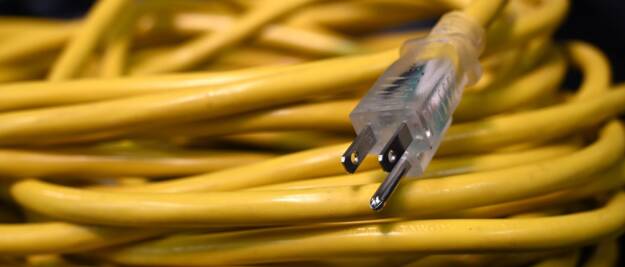
Not all power is created equal. On a busy jobsite, using the wrong cords, outlets, or generators can deliver what we like to call “bad power.” From inconsistent voltage, tripped breakers, damaged tools, or even unsafe working conditions, using the wrong setup can seriously impact the performance and lifespan of your tools and may even pose a safety risk.
In this guide, we’ll show you how to keep your tools running smoothly by choosing the correct extension cords and reliable power sources so you can avoid “bad power” and keep your projects on track.
Why Power Matters for Installation Tools
Tools are only as good as the power behind them. Installation tools often draw significant current and depend on a stable electrical supply to operate effectively. Inconsistent or “bad” power, often caused by undersized extension cords or unsuitable power sources, can lead to:
- Reduced tool performance
- Overheating and premature wear
- Tripped breakers or blown fuses
- Damage to the tool’s motor and internal components
Using the correct power configuration ensures tools run safely and efficiently under load.
Choosing the Right Power Cord
Different regions use different plug and cord standards. When choosing extension cords for installation tools, these standards matter, especially if you travel between sites or share tools with others.
When selecting or installing cords, consider the following:
Amperage & Voltage Rating: Match the cord’s rating to the tool’s requirements.
Cord Length: Longer cords increase resistance and can cause voltage drops. Use the shortest cord that safely reaches the work area.
Wire Gauge (AWG): Lower gauge numbers mean thicker wire. Heavy-duty tools often require lower AWG cords.
Construction for Environment: Choose outdoor-rated, rugged cords designed to resist wear, moisture, and jobsite abuse.
Regional Compatibility: Make sure the cord’s plug type matches local outlets or use appropriate adapters.
Common Plug Standards
In the U.S. and Canada, power plugs and outlets follow the National Electrical Manufactures Association (NEMA) standards. This includes:
- NEMA 1-15: Two-prong, ungrounded
- NEMA 5-15: Three-prong grounded (most common for tools)
Recommended Extension Cord Chart
Using the wrong extension cord is one of the fastest ways to end up with “bad power.” That’s why we provide a recommended extension cord chart, to help you choose the correct cord gauge and length for your tool and jobsite setup.
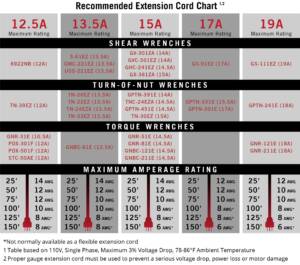
Here’s how to use it:
1. Start by Finding Your Tool
Locate your tool in the middle of the chart. Tools are grouped by application to make selection easier. Each tool model also lists its maximum current (A) in each column, which serves as the starting point for choosing the correct extension cord.
2. Determine Your Extension Cord Length
Measure the total length of the extension cord you plan to use. As cord length increases, electrical resistance increases as well, meaning longer runs require a heavier (lower-numbered) wire gauge to avoid voltage drop and “bad power.”
3. Match Amps, Length, and Gauge to the Chart
Using your tool’s maximum amperage rating (A), follow the chart to identify and match the recommended cord length (ft) and wire gauge (AWG) listed under the Maximum Amperage Rating row. Be sure to stay within the column where your specific tool is located. This ensures the cord can safely deliver consistent power.
4. When in Doubt, Go Heavier
If you’re still unsure which cord to use, always choose the heavier-gauge extension cord. Thicker wire helps prevent voltage drop, overheating, and reduced tool performance.
5. Avoid Common “Bad Power” Mistakes
- If switching between tools, always verify the extension cord is still rated for the new tool’s current.
- Don’t use light-duty household cords for high-demand tools.
- Don’t daisy-chain multiple extension cords.
- Don’t ignore voltage drop on longer runs.
Choosing the correct cord gauge helps ensure consistent power, safer operation, and longer tool life.
Power Sources for Installation Tools
Not every power source is created equal. Avoid “bad power” by following these tips:
Standard Outlets
Most installation tools plug into grounded 120 V outlets. Always verify that the outlet is properly rated and capable of handling the tool’s electrical load.
Generators
Generators are a common solution for off-grid jobsites, but improper use can quickly lead to “bad power.”
- Do not run generators on eco mode. Eco mode causes inconsistent voltage, reducing tool performance and damaging the tool’s motor.
- Do not use welding generators. These generators are designed for welding loads and will not provide stable, continuous power needed by installation tools.
- Do not plug tools into boom lifts. Boom lifts are not designed as power sources and connecting tools can create serious electrical hazards.
Battery Power
Cordless tools are increasingly popular for their convenience and portability. However, batteries must be properly matched to the tool’s power requirements and well maintained to deliver consistent performance, especially for high-demand applications.
Always fully charge lithium-ion batteries before storage. Storing batteries without a full charge can lead to deterioration, significantly reduced run time, or charging issues when the battery is needed again.
FAQs
What is “bad power”?
“Bad power” refers to inconsistent or inadequate electrical supply caused by improper cords, outlets, or power sources. It can result in poor tool performance, overheating, damaged components, or unsafe working conditions.
What happens if I use the wrong extension cord?
Using an undersized or improperly rated extension cord can cause voltage drop, overheating, tripped breakers, and tool failure, including damage to the motor and internal components.
How do I know what extension cord gauge I need?
Check your tool’s amperage rating and choose a cord with a low enough AWG (thicker wire) to safely carry that load. Check our cord chart for recommended cords.
Can I plug installation tools into a generator?
Yes, but only if the generator provides stable, continuous power and is properly sized for the tool. Avoid eco mode and welding generators, as they can cause inconsistent voltage and “bad power.”
Why shouldn’t I use eco mode on generators?
Eco mode adjusts engine speed based on load, which can cause voltage fluctuations. Installation tools require steady power, and inconsistent voltage can reduce performance and damage the tool.
Why are welding generators not recommended?
Welding generators are designed for welding arcs, not continuous tool loads. They often lack the voltage stability required for installation tools and can lead to tool damage.
Can I plug my tools into a boom lift outlet?
No. Boom lifts are not designed to be power sources for installation tools. Plugging tools into them can create serious electrical and safety hazards.
Are power strips safe for installation tools?
Standard power strips are not recommended for high-draw tools. If you need extra reach, use heavy-duty extension cords rated for the tool’s amperage instead.
Are battery-powered tools safer than corded tools?
Battery-powered tools eliminate cord-related risks, but they still require proper battery selection and maintenance. High-demand applications may still perform better with properly supplied corded power.
How often should I inspect power cords?
Inspect cords before every use. Look for cuts, fraying, exposed wires, damaged plugs, or loose connections. Damaged cords should be removed from service immediately.