
Torque wrenches are essential for delivering the power and accuracy required for bolt installations in structural steel, bridge construction, heavy equipment, and other industrial applications. When used correctly, they help ensure bolts are tightened according to project specifications while reducing the risk of connection failures, damaged fasteners, or rework.
Selecting the right torque tool involves more than simply choosing a torque range. Factors such as application requirements, available power sources, jobsite conditions, and accessibility, all play a role in determining the best solution.
At GWY, we provide torque tools, calibration services, expert repairs, rental equipment, and jobsite training to help contractors, fabricators, and ironworkers achieve consistent results in the field. This guide explains the different types of industrial torque wrenches and the key considerations when selecting the right tool for your project.
Key Takeaways
- Choosing the right industrial torque wrench depends on more than torque range. Application, accessibility, power source, fastener requirements, and jobsite conditions all matter.
- Torque and tension are not the same. Friction, lubrication, coatings, and thread condition can affect the tension achieved at a given torque.
- Different torque tools are suited to different applications, from manual torque wrenches and multipliers to electric and hydraulic systems.
- Regular maintenance and calibration help ensure accurate, repeatable torque output and support project quality requirements.
- Safe tool operation requires proper setup, power, handling, and operator awareness, particularly when working with high-capacity torque equipment.
Why Torque Matters
Proper bolt installation is critical to the performance and safety of any steel structure. The installation method used can directly affect the tension achieved in the bolt, making it important to use procedures and equipment that comply with project specifications and industry requirements.
In structural bolting applications, torque is often used to achieve the required final bolt tension. However, torque and tension are not the same thing.
Torque vs. Tension
Torque is the rotational force applied to a nut or bolt. Tension is the stretch of the bolt.
Because factors such as lubrication, coatings, and thread condition, and affect friction, two bolts tightened at the same torque may produce different levels of tension. This is why proper calibration and installation procedures are essential for achieving consistent results.
Types of Industrial Torque Wrenches
Types of Industrial Torque Tools
Industrial torque tools are available in several configurations depending on the required torque output, accessibility, and preferred power source.
Manual Torque Wrenches
Manual click-type torque wrenches are designed to signal when a preset torque value has been reached. These tools are simple to use, require minimal maintenance, and are commonly used for inspection, verification, and lower-torque applications.
Benefits include:
- Audible and tactile indication when torque is achieved
- No external power source required
- Durable and easy to maintain
- Effective in confined spaces or remote environments
Torque Multipliers
Torque multipliers increase torque output while reducing the amount of force required by the operator. They are commonly used when installing or removing large fasteners that require significant torque.
Benefits include:
- Increased torque without excessive physical effort
- Improved operator safety
- Greater control during tightening and loosening
- Available in manual and digital configurations
Electric Torque Wrenches
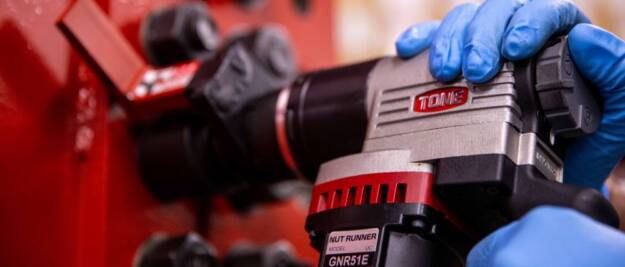
Electric torque wrenches and nutunners provide quick installations for structural steel and industrial bolting applications. Available in both corded and battery-powered configurations, these tools offer consistent performance across all models.
Benefits include:
- Repeatable torque output
- Faster installation compared to manual methods
- Powerful, compact, and lightweight
- Digital controls and data recording capabilities on select models
When using corded electric tools, proper power quality is critical. Clean, consistent power helps maintain tool performance and prevents premature wear or damage.
See Electric Torque Wrenches >
Hydraulic Torque Wrenches
Hydraulic torque wrenches are designed for high-torque applications where electric or manual tools may not provide sufficient output. These systems use hydraulic pressure to generate precise torque and are commonly used in bridge construction, heavy industrial maintenance, power generation, and infrastructure projects.
Hydraulic tools are available in two primary styles:
Square Drive Wrenches:
- Versatile for a wide range of applications
- Compatible with impact-style sockets
- Suitable for tightening and loosening operations
See Hydraulic Square Drive Torque Wrenches >
Low-Profile Drive Units with Cassettes:
- Ideal for restricted-clearance applications
- Interchangeable cassettes for multiple bolt sizes
- Commonly used where socket clearance is limited
See Hydraulic Torque Wrench Drive Units >
These tools require a hydraulic torque wrench pump and hose to operate.
Pneumatic Torque Wrenches
Pneumatic torque wrenches use compressed air to generate torque and are often used in facilities where compressed air systems are readily available.
Benefits include:
- High torque output
- Continuous operation
- Durable construction
These tools require an air compressor, hose assemblies, and proper line maintenance to ensure consistent performance.
Recommended Torque Tools by Application
The best torque tool for your project depends on the required values, available clearance, power source, and installation method. Below are common applications and the types of tools typically used.
General Structural Bolting
Electric torque wrenches are a popular choice for structural steel applications because they offer repeatable performance, portability, and ease of use.
Common applications include:
- Structural steel erection
- Bridge construction
- Industrial facilities
- Equipment installation
Minimal Clearance Applications
When access around the nut or bolt is restricted, minimal-clearance tools provide a practical solution. Their compact design and versatility allow operators to achieve the required tension in areas where standard tools cannot fit.
Common applications include:
- Tight beam connections
- Equipment maintenance
- Confined installation locations
- Flange connections
High-Torque Applications
For large-diameter fasteners or applications requiring significant torque output, hydraulic torque wrenches are often the preferred solution.
Common applications include:
- Bridge construction
- Heavy equipment maintenance
- Wind energy projects
- Power generation facilities
Torque Verification and Inspection
Manual click-type torque wrenches are frequently used for torque verification, quality control inspections, and for smaller, less heavy-duty applications where portability and simplicity are important. Digital and analogue displays make it easy to ensure the correct torque is applied every time.
Controlled Torque Multiplication
Torque multipliers provide increased torque output while allowing operators to maintain control during installation or removal. They are particularly useful when power sources are unavailable or when fasteners require gradual, controlled tightening. Available in both manual and digital configurations that pair with manual torque wrenches.
Calibration and Tool Maintenance
Torque tools are precision instruments. Over time, normal use, transportation, environmental conditions, and wear can affect performance.
Routine servicing helps ensure:
- Accurate torque output
- Repeatable performance
- Compliance with project specifications
- Reliable quality control documentation
- Confidence in installation results
Many manufacturers recommend annual calibration for torque tools or after a specified number of operating cycles.
For projects requiring documented quality assurance, calibration certificates may also be required by owners, inspectors, or contractors.
Signs Your Torque Tool May Need Calibration
Consider scheduling calibration if you notice:
- Inconsistent installation results
- Visible damage or excessive wear
- Unusual tool operation
- Missed maintenance intervals
- Significant impacts or drops
Regular maintenance and calibration can help extend tool life while reducing downtime and costly project delays.
Safety Tips & Best Practices
Proper operation, maintenance, and setup are essential for achieving accurate results and extending the life of your torque tools. Following these best practices can help improve safety, reduce downtime, and ensure consistent performance on the jobsite.
Prioritize Operator Safety
High-capacity torque tools generate significant force and should always be operated according to manufacturer recommendations.
Keep these safety guidelines in mind:
- Inspect tools, accessories, and power sources before use
- Keep hands and fingers clear of reaction points and moving components
- Verify sockets and accessories are rated for the application
- Remain aware of pinch points and reaction forces during operation
- Secure tools with approved lanyards or tethering systems when elevated
- Follow safety procedures and wear personal protective equipment
Clean Power Considerations
Electric torque tools are designed to operate within specific voltage requirements. Inconsistent voltage or improper power sources can affect tool operation and may lead to premature wear or equipment damage.
To help ensure optimal performance:
- Use properly sized extension cords, gauge and length
- Avoid excessive extension cord lengths whenever possible
- Verify that generators meet tool power demands
- Inspect power sources regularly for signs of wear or damage
- Protect cords and connections from moisture and physical damage
When in doubt, consult your tool supplier before connecting electric torque tools to generators or temporary jobsite power sources.
Tool Storage and Handling
Proper storage plays an important role in maintaining tool accuracy and longevity.
Best practices include:
- Store tools in their protective cases when not in use.
- Keep tools clean and dry.
- Protect equipment from impacts and unnecessary exposure to the elements.
- Inspect tools after transportation and before use.
- Follow manufacturer recommendations for storage and handling.
A well-maintained torque tool delivers more reliable performance, improves jobsite safety, and helps ensure successful bolted connections.
Questions to Ask Before Selecting a Torque Tool
Before purchasing or renting a torque wrench, consider the following:
Application Requirements
- What torque range is required?
- What level of accuracy is needed?
- How often will the tool be used?
- Is documentation or data recording required?
Fastener Specifications
- What bolt diameter is being installed?
- What fastener grade is specified?
- What installation method is being used?
- Are there project-specific requirements for pretensioning?
Jobsite Conditions
- Is power readily available?
- Will the work be performed indoors or outdoors?
- Are there environmental concerns such as moisture, heat, or cold?
- How much access is available around the connection?
Safety Requirements
- Are dropped-object prevention measures required?
- Will the work be performed at height?
- Are tool lanyards or tethering systems required?
- Are there site-specific safety procedures that must be followed?
Service and Support
- Is calibration support available?
- Can the supplier provide repair services?
- Are replacement parts readily available?
- Is operator training available?
Selecting the right supplier is just as important as selecting the right tool.
Choosing the Right Torque Tool Partner
A torque tool is only one part of a successful bolting operation. Reliable equipment, calibration, training, technical support, and responsive service all contribute to achieving consistent installation results.
With over 50 years of experience supporting structural bolting projects, GWY provides torque tools, hydraulic solutions, tool rentals, calibration services, repairs, and training for contractors, fabricators, and project teams across North America.
Whether you’re installing structural steel, maintaining critical infrastructure, or preparing for a major project, our team can help you identify the right solution for your application.
Need Help Selecting the Right Torque Tool?
We offer sales, rentals, calibration services, repairs, and expert-led training to help your team achieve accurate, repeatable bolted connections. Contact our team to discuss your project requirements and find the right torque solution for the job.
FAQs
What is the difference between torque and bolt tension?
Torque is the rotational force applied to a fastener, while tension is the stretch created in the bolt. Because friction, lubrication, coatings, and thread condition can affect the relationship between the two, achieving a specific torque does not necessarily produce the same bolt tension every time.
How often should an industrial torque wrench be calibrated?
Many manufacturers recommend calibration annually or after a specified number of operating cycles. Project specifications or quality requirements may also require documented calibration.
What should I consider when selecting an industrial torque wrench?
In addition to the required torque range, consider the fastener size and grade, installation method, available clearance, power source, jobsite conditions, required accuracy, frequency of use, and whether documentation or data recording is needed.
Can electric torque wrenches be used with generators?
Yes, but the generator must meet the tool’s power requirements. Properly sized extension cords, appropriate voltage, and avoiding overloaded circuits are important for maintaining consistent performance and preventing equipment damage.
What is the advantage of a low-profile hydraulic torque wrench?
Low-profile hydraulic torque wrenches are designed for applications where socket clearance is limited. Their compact drive units and interchangeable cassettes can make them useful for restricted-clearance connections.
When should a torque wrench be serviced or inspected?
A torque tool should be inspected if it has been dropped or significantly impacted, shows visible damage or excessive wear, operates unusually, produces inconsistent results, or has missed its recommended maintenance interval.