
When installing high-strength structural bolts, the bolt assembly must be able to develop the required tension without thread failure, galling, or fracture.
Rotational Capacity (ROCAP) testing helps verify that a bolt, nut, and washer assembly can perform as required before it is used in the field.
ROCAP testing is particularly important for galvanized high-strength structural bolt assemblies, where lubrication and the interaction between the bolt and nut can affect installation performance.
In this guide, we’ll explain what ROCAP testing is, what it evaluates, what equipment is used, and how the test is performed.
Key Takeaways
- ROCAP testing verifies that a high-strength bolt assembly can develop the required tension without galling, thread failure, or bolt fracture.
- Each bolt, nut, and washer assembly is tested as a lot, with separate testing required for applicable assemblies from different lots.
- Long and short bolt assemblies require different testing procedures, depending on whether the assembly can fit into a tension-measuring device.
- A successful assembly must withstand the required rotation without breaking, stripping, or experiencing thread failure.
- ROCAP testing is commonly associated with bridge and federally funded projects, but it may also be required for other structural applications.
What Is ROCAP Testing?
Rotational Capacity (ROCAP) testing is used to verify the presence and efficacy of lubrication on high-strength bolt assemblies. The test evaluates the tension, ductility, and thread strength of an assembly consisting of a bolt, nut, and washer, and establishes whether the assembly can withstand the required tension without failure.
The test verifies that:
- The assembly can develop the desired load
- The nut will not gall on the bolt
Galling occurs when sustained friction between contacting metal surfaces causes the materials to break down or adhere to one another. If galling or thread failure occurs during installation, the assembly may not achieve the required pretension.
ASTM International Standards requires bolt manufacturers to perform ROCAP testing before shipping applicable bolt assemblies and provides procedures for both long and short bolt assemblies. Installers may also perform separate testing onsite. Each lot of bolts and nuts must be tested individually.
When Is ROCAP Testing Required?
ROCAP testing is commonly required on bridge construction projects, particularly projects performed under applicable American Association of State Highway and Transportation Officials (AASHTO) specifications. State and local Department of Transportation and Federal Highway Administration projects may also require ROCAP testing.
Originally developed to evaluate galvanized bolts used on bridges, ROCAP testing has expanded to other industrial and structural applications where the purchaser requires it.
What Tools Are Needed for ROCAP Testing?
The equipment required depends on whether the assembly is being tested using the long-bolt or short-bolt procedure.
Method 1: Long Bolt Test Procedure
- Calibrated bolt tension measuring device
- Appropriate bushings and spacers
- Spud wrench
- Turn-of-Nut or electric torque wrench
- Digital Torque Meter (DTM)
Method 2: Short Bolt Test Procedure
- Steel plate
- Spud wrench
- Turn-of-Nut or electric torque wrench
For each diameter and length being tested, three identical bolt, nut, and washer assemblies are required. If the same size bolt comes from different lots, each lot must be tested separately. The components used for testing should be new, unused, and randomly selected from the project materials.
Important: ROCAP testing does not apply to bolts longer than 12 times their diameter.
Rent or Buy:
Find bolt tension calibrators and torque wrenches for your next project here.
Long-Bolt Test Procedure
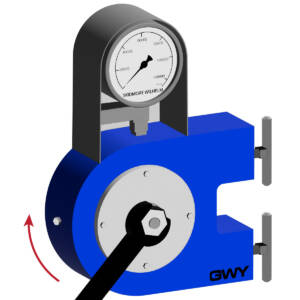
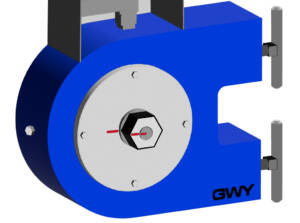
- Install the assembly in the calibrator
Install the bolt and any required spacers in the tension measuring device. The bolt stick-out should be flush with the nut, with a maximum of three threads stick-out beyond the nut. - Apply the required pretension
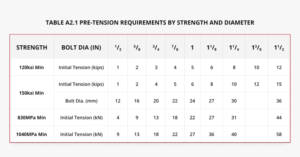
Tighten the assembly to the applicable pretension requirement specified in Table A2.1.

 Snug- Example using a 7/8″ diameter bolt
 - Matchmark the assembly
Match-mark the bolt, nut, and plate of the bolt tension measuring device. This establishes the starting point for measuring rotation.
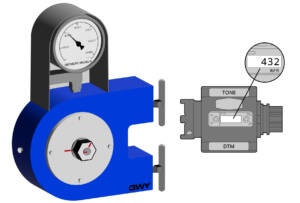
- Record tension and torque
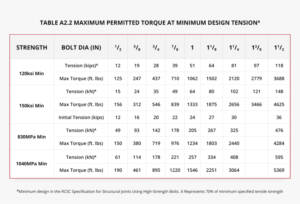
Tighten the fastener assembly to at least the minimum installation tension in Table A2.2 and record both the tension and torque. The torque should be read with the nut in motion.

 Record torque at minimum tension- Example shows 41 kips for a 7/8″ diameter bolt, 1 kip = 1000 lbf
 - Apply the required rotation
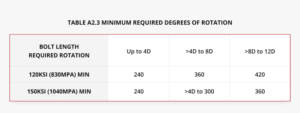
Continue tightening the nut to the amount specified in Table A2.3. The rotation is measured from the initial matchmark. If the assembly strips or fractures before reaching the required rotation, it fails the test.
 Tighten the nut to 4D- Example shows 240°
 - Record the final tension
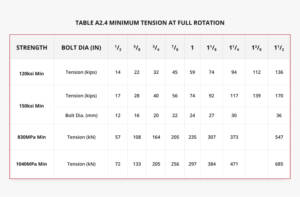
Record the tension at the completion of the rotation in Table A2.3. The tension should equal or exceed 1.15 × the minimum installation tension. The minimum required values are listed in Table A2.4.
- Inspect the assembly
After testing, loosen and remove the assembly for inspection. There should be no signs of thread failure, stripping, or torsional failure. The nut should be able to turn back to its original test position. Inability to turn the nut by hand is considered thread failure, as well as broken bolts.
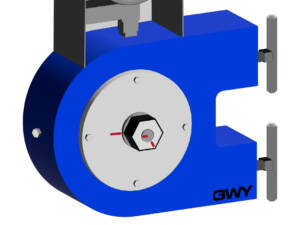
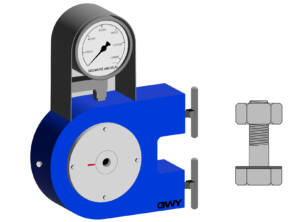 Note: Bolt assembly passes the ROCAP test when the bolt doesn’t break, and the nut turns on the bolt threads to the position it was in during the test
Short-Bolt Test Procedure
This method is meant for bolts too short to fit in a tension measuring device.
- Install the assembly
Install the bolt assembly into the steel plate. The bolt stick-out should be flush with the nut, or with a maximum of three threads stick-out. - Apply the required pretension
Tighten the assembly not exceeding 20% of the torque permitted in Table A2.6.
- Matchmark the assembly
Match-mark the bolt, nut, and plate of the bolt tension measuring device. This establishes the starting point for measuring rotation. - Record tension and torque
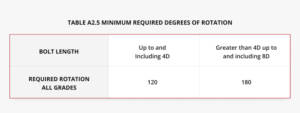
Tension the bolt by rotating the nut as required in Table A2.5, while preventing the bolt head from rotating. Take a torque reading at the required rotation with the nut in motion.
- Apply the required rotation
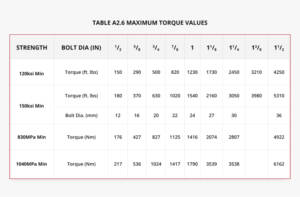
The torque measurement taken at step 4 should not exceed the values listed in Table A2.6. Assemblies that exceed the listed torque fail the test. Torque values are based on the assumed tension of 1.15 × minimum installation tension. - Record the final tension
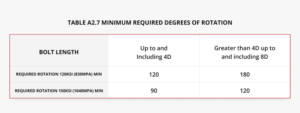
Further tighten the bolt the additional rotation listed in Table A2.7. Assemblies that strip or fracture prior to this rotation fail the test.
7. Inspect the assembly
After testing, loosen and remove the assembly for inspection. There should be no signs of thread failure, stripping, or torsional failure. The nut should be able to turn back to its original test position. Inability to turn the nut by hand is considered thread failure, as well as broken bolts.
Causes a ROCAP Test to Fail
An assembly automatically fails if:
- The bolt breaks
- The nut can be loosened by hand
- The threads shear or strip
- The assembly cannot achieve the required rotation
- The assembly exceeds the applicable maximum torque
- The assembly does not achieve the required tension after the specified rotation
A failed ROCAP test does not necessarily mean the bolt itself is defective. The performance of the complete assembly, including the bolt, nut, washer, coating, and lubrication, must be considered.
ROCAP Test Lot Numbers
Each tested bolt, nut, and washer assembly is assigned a ROCAP Test Lot Number (RC #).
The complete assembly should be marked with its RC #. If one of the components is changed, the entire ROCAP test must be performed again and the assembly receives a new RC #.
This helps maintain traceability between the tested assembly and the materials being used on the project.
Need Equipment for ROCAP Testing?
ROCAP testing requires the right equipment and an understanding of the applicable testing procedure.
GWY offers bolt tension calibrators, torque equipment, rentals, and calibration services to support structural bolting projects. Our team can help you determine what equipment is appropriate for your testing requirements. Give us a call at (603) 836-9167 or send us a message to request a quote, and we’ll recommend the best tools for the job.
FAQs
What does ROCAP stand for?
ROCAP stands for Rotational Capacity testing.
What does ROCAP testing verify?
ROCAP testing evaluates whether a high-strength bolt assembly can develop the required pretension and withstand the required rotation without galling, stripping, thread failure, or bolt fracture.
How many assemblies are required for a ROCAP test?
Three identical assemblies of bolts, nuts, and washers are required for each diameter and length being tested. If the same size components come from different lots, each lot must be tested separately.
Can short bolts be ROCAP tested?
Yes. A separate short-bolt procedure is used for bolts that are too short to fit into a tension-measuring device.
Where is ROCAP testing commonly required?
ROCAP testing is commonly required for bridge construction and certain state, local, and federally funded projects. A purchaser may also require ROCAP testing for other structural applications.